
For many safari operators, losing bookings is usually blamed on pricing.
If a traveller chooses another operator, the assumption is often that someone else offered a cheaper itinerary or a better package. Sometimes that’s true. But another pattern is becoming increasingly difficult to ignore.
Many bookings are not lost because the safari itself is weak. They are lost because the booking process feels slow.
A traveller submits an enquiry while excitement is high. They are actively researching, comparing operators, discussing dates with family members, and imagining the trip already. But then the operational process behind the scenes begins to slow momentum down. Availability needs checking, suppliers need contacting, park fees need calculating, and the itinerary has to be rebuilt manually before a quote can even be sent.
By the time the proposal arrives, the emotional energy behind the enquiry has often cooled.
This is becoming one of the biggest hidden challenges in safari sales.
Why Modern Travellers Expect Faster Safari Quotes
Traveller expectations have changed dramatically over the last decade. People are now used to booking almost every part of travel instantly. Flights confirm within seconds, hotels display live availability, and online travel platforms allow users to compare options immediately.
Safari remains one of the few travel sectors where delays are still widely accepted internally, even though travellers themselves are becoming far less patient.
That does not mean safari should become automated and impersonal. Quite the opposite. The human expertise behind safari planning is part of what makes the experience so valuable.
But modern travellers still expect responsiveness.
When a safari operator takes several days to produce a quote, uncertainty begins to creep into the process. Travellers start wondering whether availability is reliable, whether pricing is accurate, or whether another operator may respond faster.
Speed influences confidence far more than many businesses realise.
The Operational Reality Behind Slow Safari Quoting
The reason safari quote turnaround times remain slow is understandable. Safari itineraries are operationally complex.
A single booking can involve multiple lodges, regional flights, transfers, experiences, park fees, seasonal pricing structures, agent commissions, and circuit discounts. Managing all of that manually requires significant coordination.
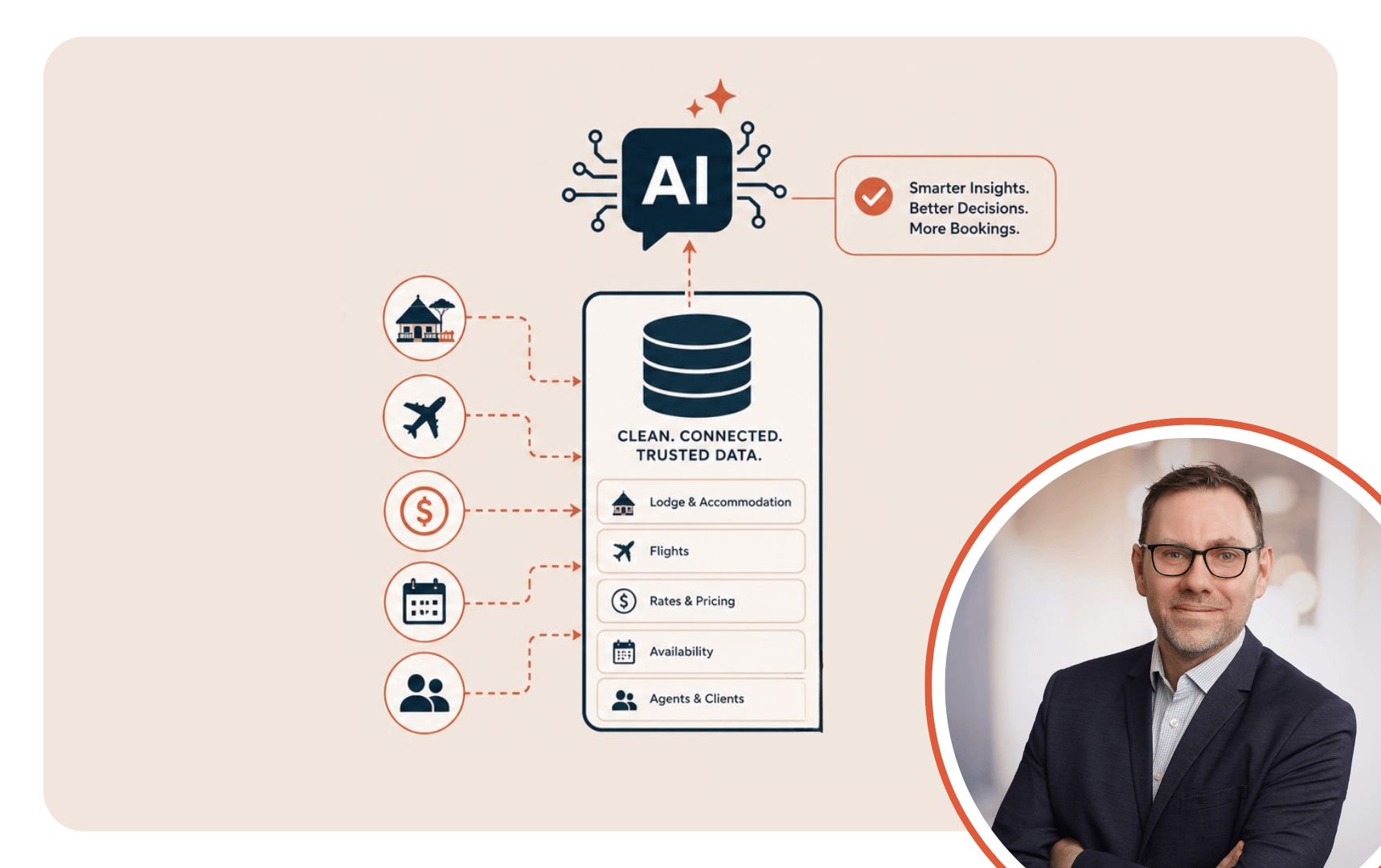
The challenge is that many safari businesses are still relying on fragmented operational systems.
Availability is checked over email. Rates are managed in spreadsheets. Supplier information sits across disconnected documents. Proposals are rebuilt manually for every enquiry.
At smaller volumes this may feel manageable, but as enquiry levels increase, operational friction begins to accumulate quickly. Teams spend more time rebuilding existing information than actually selling safaris.
That creates pressure internally while also slowing response times externally.
Why Faster Safari Quotes Improve Conversion
One of the biggest misconceptions in safari sales is that travellers only compare price.
In reality, travellers are often evaluating confidence.
A professional itinerary delivered quickly sends a strong signal that the operator is organised, experienced, and operationally reliable. The traveller feels reassured that the business understands the destination, has strong supplier relationships, and can deliver the safari smoothly.
That emotional reassurance matters enormously in high-value travel.
Safari bookings are often once-in-a-lifetime purchases involving thousands of pounds or dollars. Travellers want to feel certainty before committing.
The quoting process becomes the first real demonstration of how the safari experience itself will feel.
Operators who respond quickly with clear, professionally presented itineraries often convert more effectively, even when they are not the cheapest option.
Why Presentation Matters As Much As Speed
A safari proposal is not simply an administrative document. It is part of the sales experience itself.
Yet many operators still rely heavily on spreadsheets, plain PDFs, or long text-heavy emails that fail to communicate the emotional value of the trip.
Safari is inherently visual and emotional. Travellers are not simply buying transport and accommodation. They are buying a honeymoon, a family milestone, a photography expedition, or a once-in-a-lifetime adventure.
Professional itinerary presentation helps reinforce that emotional value.
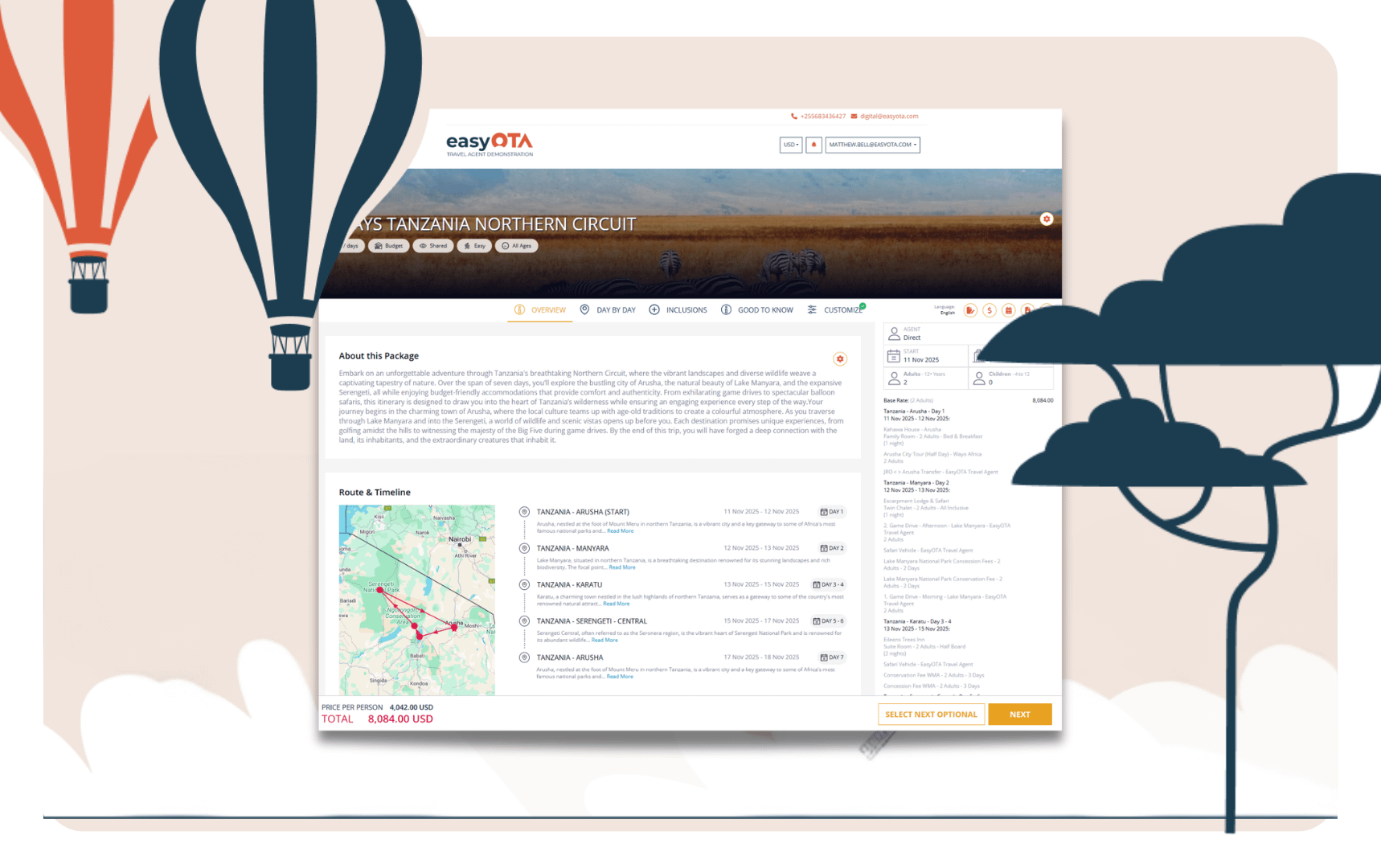
Clear layouts, strong imagery, maps, structured pricing, and polished formatting all contribute to a stronger perception of quality and professionalism. This is one reason safari itinerary software has become increasingly important for modern operators.
The strongest safari businesses understand that the proposal itself plays a direct role in conversion.
Why Safari Businesses Are Reconsidering Their Operational Workflows
Across the safari industry, more operators are beginning to rethink how they manage bookings.
Not because they necessarily want more technology, but because operational complexity is becoming harder to sustain manually.
As businesses grow, operational cracks become increasingly visible. Teams become dependent on specific staff members, pricing logic becomes inconsistent, supplier information becomes fragmented, and repetitive admin begins consuming valuable time.
Eventually growth itself starts feeling operationally heavy.
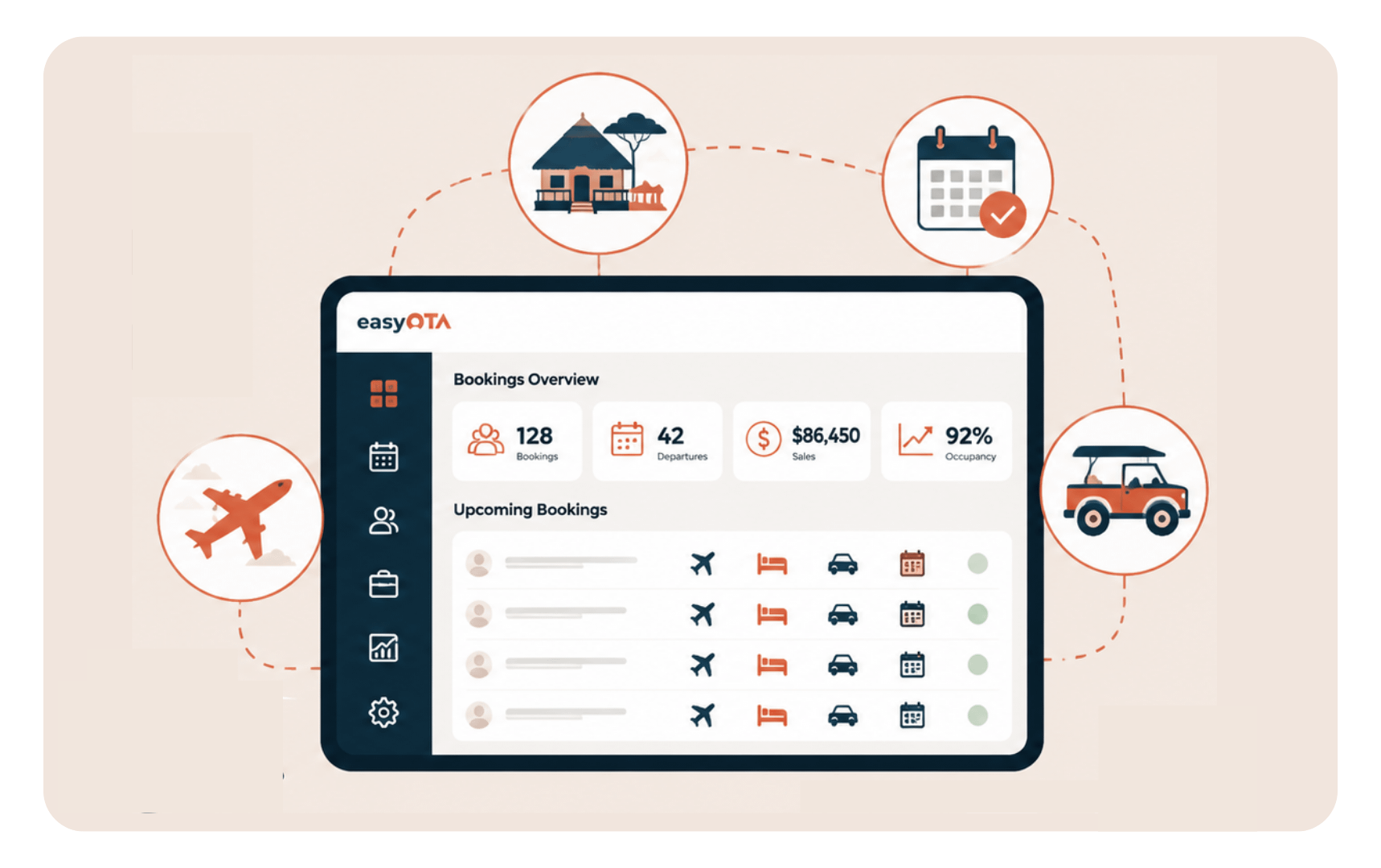
This is why safari booking software designed specifically for safari workflows is becoming more relevant. Operators are increasingly looking for systems that reduce friction behind the scenes while still preserving the personal, relationship-driven nature of safari sales.
The businesses moving fastest today are usually the ones simplifying operational drag rather than adding more manual processes.
The Future Of Safari Booking Operations
The safari industry remains incredibly strong. Global demand for experiential travel continues to grow, and travellers still place enormous value on authentic safari experiences.
But operational expectations are evolving.
Travellers increasingly compare safari booking experiences against every other part of modern travel, and operators who reduce friction will increasingly position themselves more competitively.
That does not mean removing the human side of safari. If anything, stronger operational systems create more time for relationship building, personalisation, and sales conversations.
The operators who simplify quoting, improve presentation, reduce repetitive admin, and create cleaner booking workflows are likely to be the businesses that continue scaling most successfully over the next decade.
Operational efficiency is no longer separate from growth.
Increasingly, it is one of the main drivers of it.
 Book a demo to see how we support success in our partners.