

Most booking errors inside safari businesses are not caused by carelessness.
They are usually caused by operational complexity.
A consultant copies outdated pricing into a proposal. Availability changes while suppliers are still confirming space. A transfer is missed because information is sitting across multiple email threads. Somebody updates one spreadsheet but forgets to update another.
At first, these mistakes appear manageable. But as enquiry volumes increase, operational inconsistency begins creating much bigger problems.
Many safari businesses eventually reach a stage where generating demand is no longer the biggest challenge. The real challenge becomes maintaining accuracy while handling more bookings, more suppliers, and more moving parts simultaneously.
That is where operational pressure starts affecting profitability.
Why Safari Booking Errors Increase As Businesses Grow
Safari operations are naturally layered. Even relatively straightforward itineraries can involve accommodation, flights, transfers, experiences, park fees, guide allocations, special requests, and agent pricing structures.
Every additional component creates another opportunity for operational inconsistency.
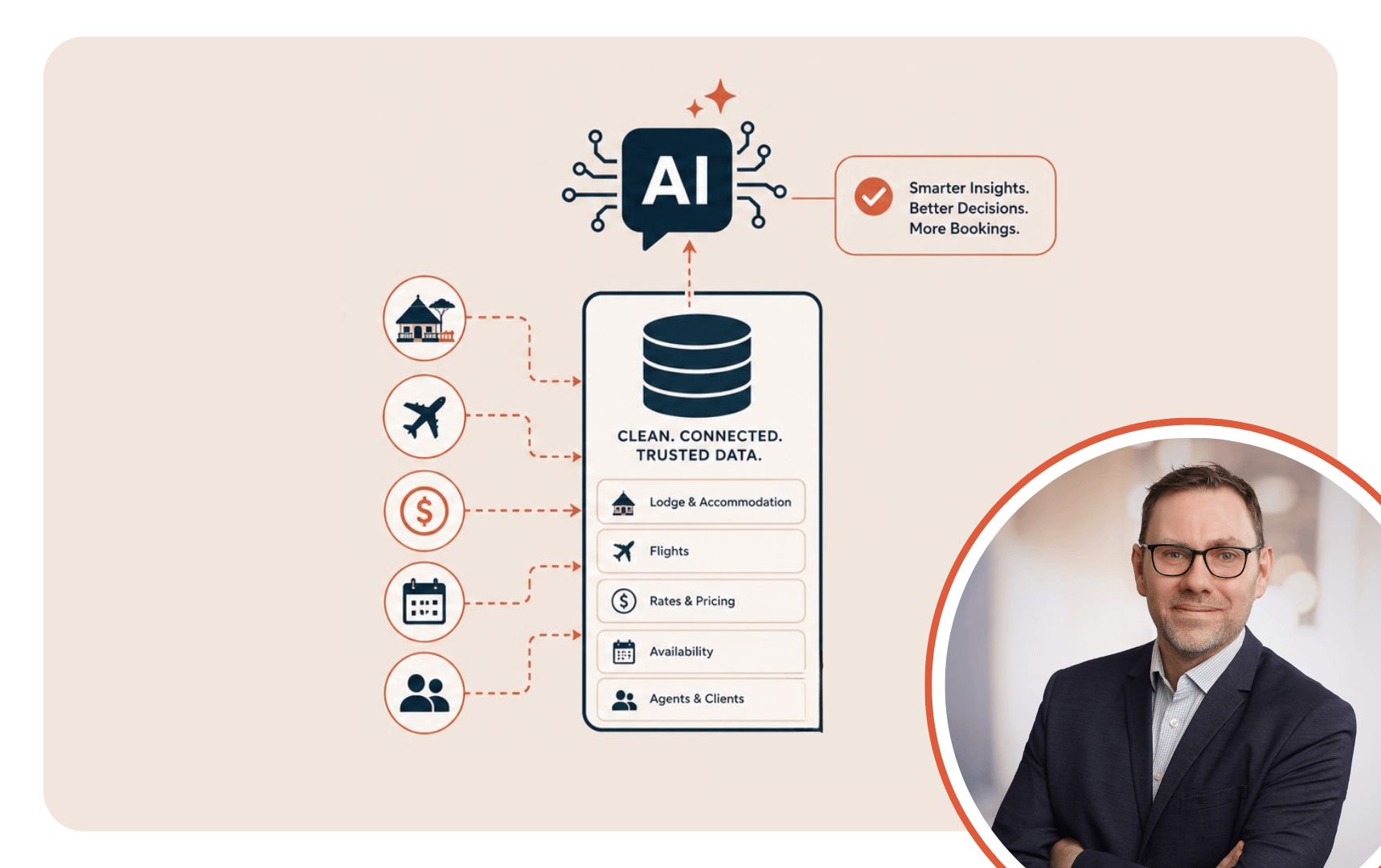
The issue becomes even more difficult when businesses rely on disconnected systems. One consultant manages supplier information in spreadsheets, another tracks availability over email, and another builds proposals manually using old templates.
Eventually information becomes fragmented across the business.
At that point, operational reliability often depends more on memory than on process.
That creates risk.
Why Double Bookings And Pricing Errors Damage More Than Revenue
Operational mistakes in safari rarely stay operational.
They affect trust.
Travellers booking a safari expect professionalism and reassurance throughout the process. If pricing suddenly changes or availability disappears after confirmation, confidence weakens immediately.
The same applies to agents and supplier relationships.
One inaccurate quote or operational mistake may seem minor internally, but repeated inconsistency slowly damages credibility over time.
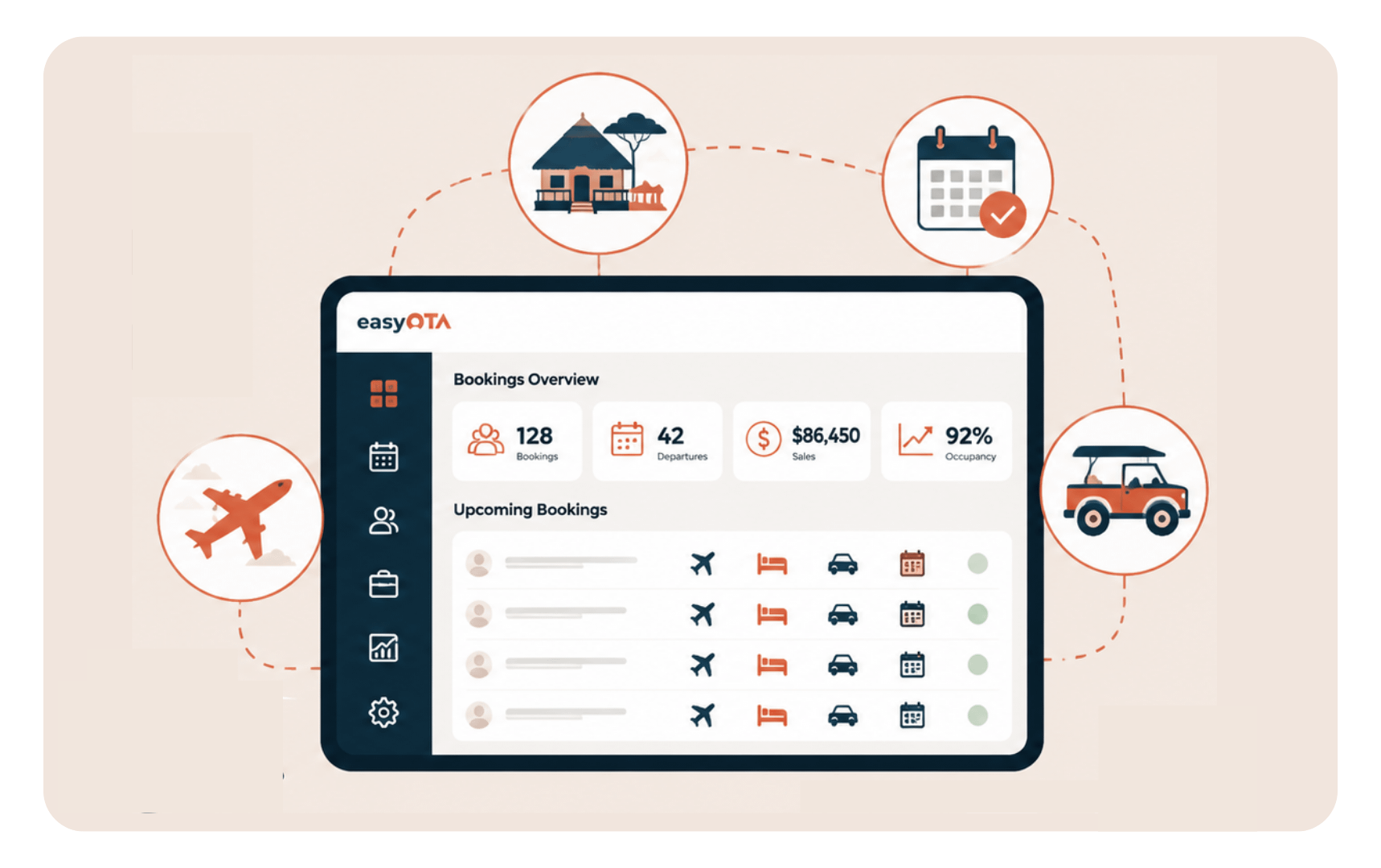
This is one reason live availability and centralised pricing systems are becoming increasingly important across the safari industry.
Not because they sound modern, but because they reduce avoidable operational risk.
Why More Staff Does Not Always Solve Operational Problems
When safari businesses become overwhelmed, the instinctive reaction is often to hire more people.
Sometimes that is necessary.
But additional staff alone rarely fix operational inconsistency if the workflow itself remains fragmented.
In many cases, growth simply creates more communication layers, more duplicated tasks, and more opportunities for human error.
The businesses scaling most successfully are usually the ones improving operational clarity first.
That means:
Centralising information. Standardising workflows. Reducing repetitive admin. Creating cleaner quoting systems.
Operational structure matters far more than many safari businesses realise.
Why Safari-Specific Automation Is Becoming More Important
Automation is sometimes misunderstood inside safari operations because operators worry it will make the business feel less personal.
In reality, the strongest safari booking systems automate repetitive processes, not relationships.
Tasks like applying circuit discounts, managing provisional booking expiry dates, generating itineraries, tracking deposits, or updating confirmations are highly repetitive administrative functions.
When those tasks are automated properly, consultants gain more time to focus on what actually creates value:
Understanding travellers. Building itineraries. Strengthening supplier relationships. Closing bookings.
That is where human expertise matters most.
Why Generic Travel Software Often Creates More Friction
Many safari operators originally adopted generic travel platforms because they appeared flexible enough to handle multiple travel products.
But safari operations involve unique complexities that generic systems rarely handle cleanly.
Park fee structures, multi-stop itineraries, seasonal pricing layers, circuit discounts, and agent-specific rate groups all create workflows that generic systems were not designed around.
Eventually businesses start building workarounds outside the system itself.
That is usually the warning sign.
Once teams rely heavily on spreadsheets and manual processes outside the platform, operational duplication begins slowing the business down.
This is why safari-specific booking software is becoming increasingly relevant.
Operators are looking for systems built around safari logic from the beginning rather than systems adapted afterwards.
Why Operational Clarity Creates Competitive Advantage
The safari businesses positioning themselves strongest for the future are not necessarily the biggest operators.
They are usually the businesses creating the cleanest operational systems behind the scenes.
They respond faster. They manage pricing more consistently. They reduce repetitive admin. They create more reliable booking workflows.
The result is not simply operational efficiency.
It is stronger conversion, better supplier confidence, fewer avoidable mistakes, and a booking process that feels far more professional for both agents and travellers.
Operational clarity is increasingly becoming a competitive advantage in safari.
 Book a demo to see how we support success in our partners.