

Many safari operators assume that expanding their supplier network automatically strengthens the business.
More lodges, more camps, more experiences, and more transfer providers should theoretically create more sales opportunities.
Sometimes they do.
But supplier growth also introduces operational complexity, and unmanaged complexity quietly slows many safari businesses down.
This is something the industry does not always discuss openly enough.
At a certain point, adding more suppliers can begin creating more operational friction than commercial advantage.
Supplier Complexity Can Be Difficult To Manage
Every supplier introduces different pricing structures, availability systems, cancellation policies, room categories, communication styles, and operational processes.
Without strong operational systems behind the scenes, supplier growth gradually creates fragmentation.
Consultants spend increasing amounts of time checking rates, clarifying availability, updating contracts, rebuilding proposals, and cross-referencing information across disconnected systems.
Eventually the business becomes operationally heavy.
This does not mean operators should reduce choice aggressively. Travellers still want personalised itineraries, flexible experiences, and varied accommodation options.
The issue is not supplier variety itself.
The issue is how efficiently that variety is managed.
Why Curated Supplier Networks Perform Better
The strongest safari operators are not necessarily the businesses with the largest supplier databases.
They are often the businesses with the clearest operational ecosystems.
Reliable supplier relationships, integrated availability, structured pricing, and consistent communication create significantly more operational stability than simply adding more products.
That stability matters because travellers increasingly expect fast responses, accurate pricing, and professional itinerary presentation.
Operational simplicity behind the scenes directly influences how confidently a business can respond.
Supplier Connectivity Is Becoming More Important
One of the biggest shifts happening across safari tourism is the growing importance of operational connectivity.
How quickly can consultants:
Check availability? Generate itineraries? Confirm pricing? Update proposals? Secure bookings?
The safari businesses performing strongest today are usually the ones reducing operational gaps between suppliers, internal teams, and agents.
That creates speed.
And speed increasingly influences conversion.
Disconnected Supplier Information Slows Everything Down
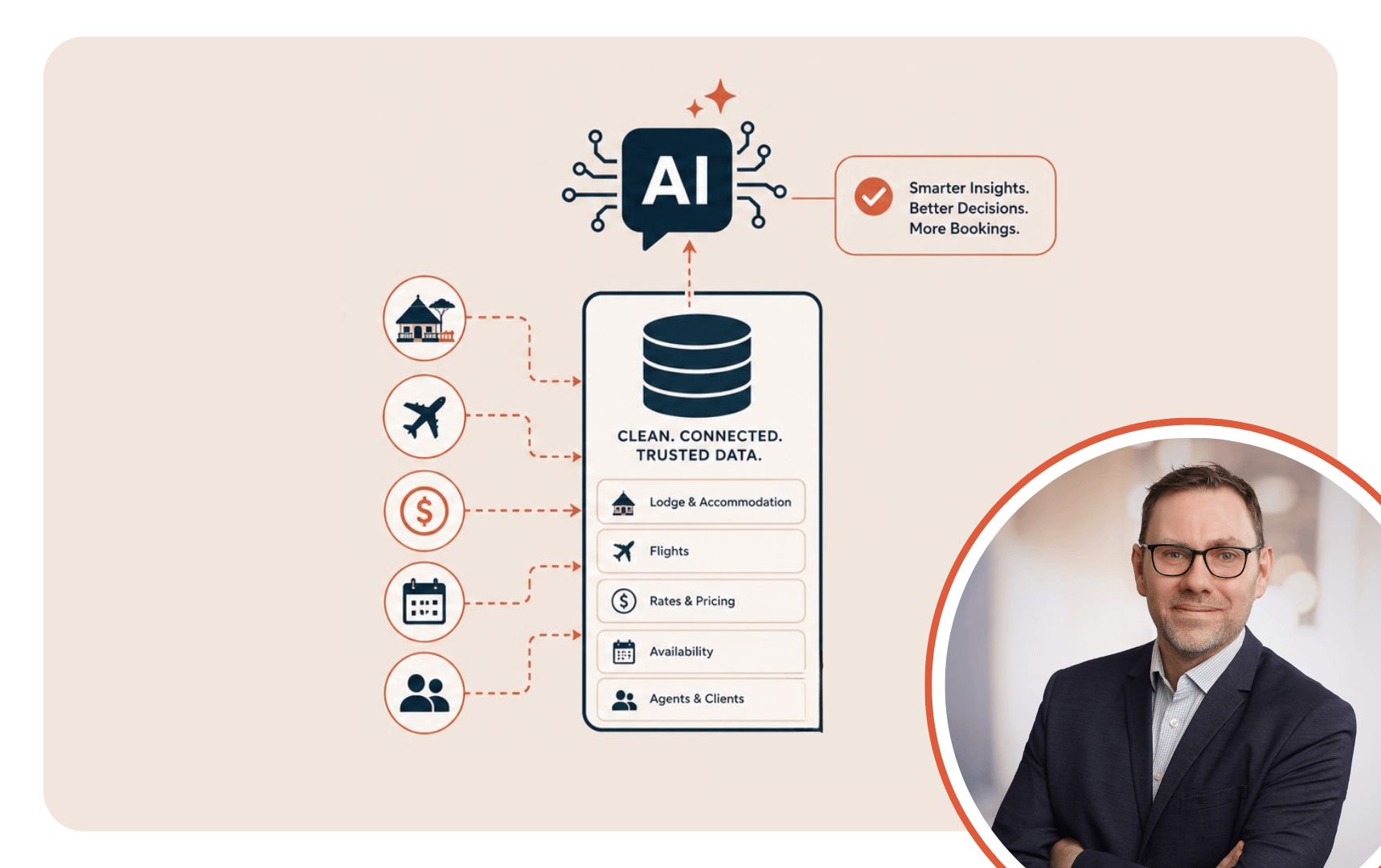
Many safari businesses still manage supplier information across spreadsheets, PDFs, folders, email threads, and old proposal templates.
Individually, these systems may feel manageable.
Collectively, they create enormous duplication.
Consultants repeatedly rebuild supplier information into proposals, update pricing manually, search for imagery, or clarify operational details that should already sit inside a structured workflow.
Over time, this slows:
Quote turnaround. Operational consistency. Training. Scalability.
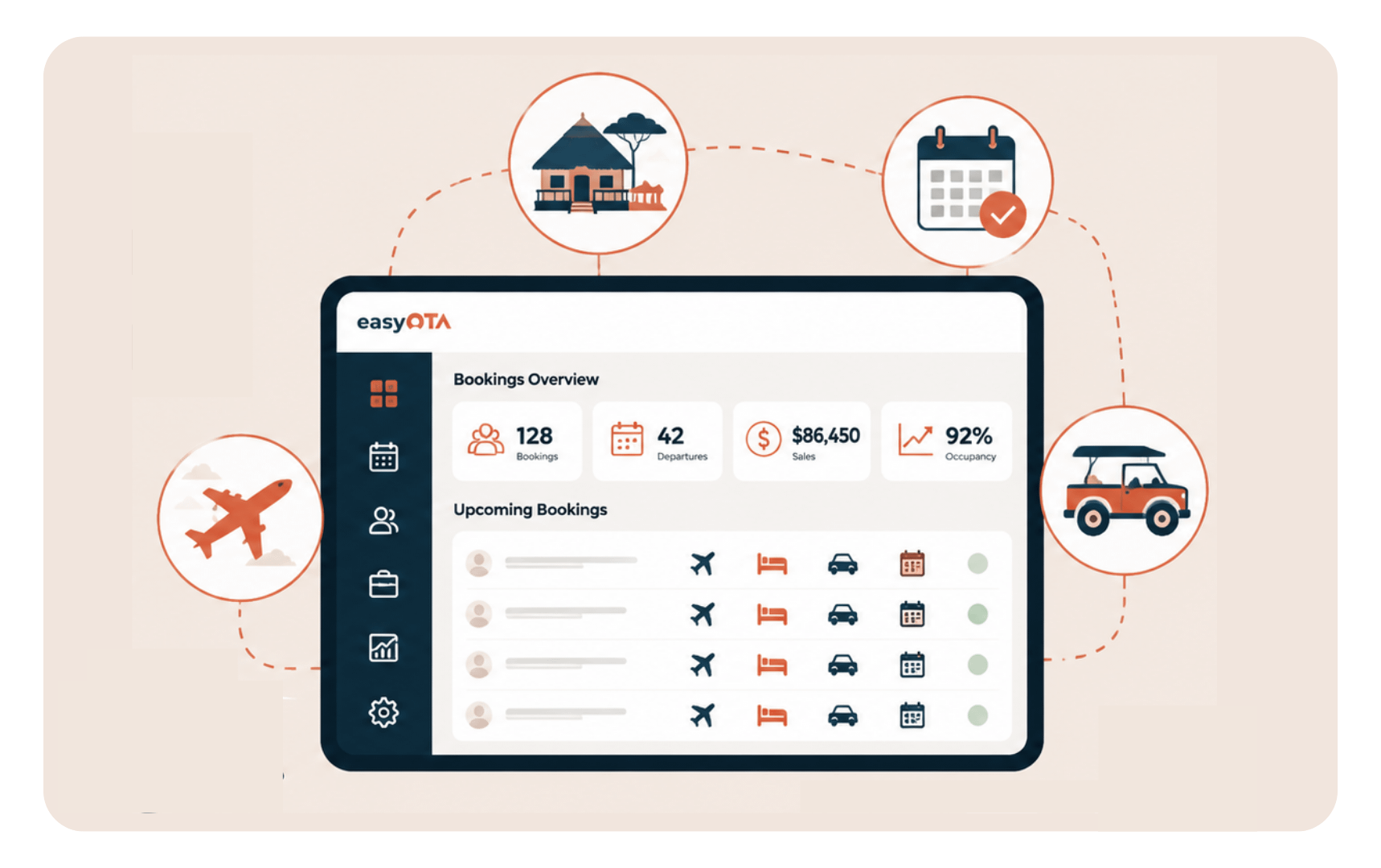
This is one reason safari itinerary systems and safari booking software are becoming more important operational tools.
When supplier information, pricing logic, imagery, and operational workflows sit inside one connected system, the quoting process becomes significantly cleaner.
Supplier Relationships Matter
Technology alone is not the answer.
Safari remains deeply relationship-driven.
The strongest operators still build long-term partnerships with lodges, guides, airlines, and experience providers because trust and communication remain central to safari delivery.
But strong relationships alone cannot compensate for fragmented workflows forever.
Operational structure still matters.
The businesses growing most sustainably are usually the ones combining strong supplier relationships with cleaner operational systems behind the scenes.
The Future Of Supplier Management In Safari
The safari industry is becoming more digitally connected every year.
Travellers increasingly expect responsiveness, clarity, and professionalism throughout the booking process. Meeting those expectations requires more than simply expanding supplier lists.
It requires systems capable of managing safari complexity efficiently.
The businesses positioned strongest for the future will likely not be the ones carrying the largest operational footprint.
They will be the operators creating the cleanest, most connected operational ecosystems behind the scenes.
Because in safari, complexity is inevitable.
Operational chaos is not.
 Book a demo to see how we support success in our partners.