

One thing I’ve noticed over the years working with safari operators is that operational pressure tends to build slowly.
Most businesses do not suddenly become overwhelmed overnight. Instead, small inefficiencies gradually accumulate until they become normalised inside the business.
A quote takes slightly longer than it used to. Somebody has to double-check pricing manually. Availability confirmations begin sitting across long email threads. Consultants spend evenings rebuilding itineraries that should already exist inside the system.
Individually, none of these issues feel catastrophic. But over time they create operational weight that quietly slows the entire business down.
I think many safari operators have accepted this level of friction for so long that they no longer question it.
When I first started building systems in East Africa, much of this was simply part of the industry. Safari businesses were smaller, travellers were more patient, and digital expectations were nowhere near what they are today.
But that environment has changed dramatically.
Travellers now expect speed, clarity, and professionalism throughout the booking process because that is what they experience everywhere else in travel. Safari operators are therefore trying to operate at modern digital speed while still relying on workflows that were designed for a very different era.
That tension is becoming increasingly difficult to manage.
Why The Problem Is Usually Friction, Not Effort
One thing I always try to emphasise is that safari teams are incredibly hardworking.
The issue is rarely effort.
The issue is usually operational friction.
I’ve sat with consultants who were rebuilding the same itinerary multiple times because supplier responses changed halfway through the quoting process. I’ve seen businesses where key operational knowledge lived almost entirely inside one experienced staff member’s head because the systems surrounding them were too fragmented.
None of this happens because people are careless.
It happens because safari operations are naturally complex, and many businesses are still trying to manage that complexity manually.
Eventually growth itself starts feeling heavy.
Every additional booking creates more checking, more emails, more opportunities for mistakes, and more pressure on already stretched teams.
That is usually the point where businesses begin realising they are carrying too much operational weight.
Why Repetition Is One Of The Biggest Hidden Problems In Safari Operations
One thing that strikes me constantly in this industry is how much highly skilled time gets consumed by repetitive tasks.
Consultants repeatedly copying supplier descriptions into proposals. Manually checking availability across multiple lodges. Recalculating pricing structures that should already exist inside a workflow. Updating documents that have already been updated somewhere else.
The safari industry is filled with knowledgeable people spending large parts of their day on tasks that software should already be handling.
That is not a good use of expertise.
The best consultants should be spending their time understanding travellers, designing better experiences, strengthening supplier relationships, and closing sales.
Instead, many teams are stuck managing operational clutter.
Why Generic Travel Software Often Creates More Workarounds
Over the years I’ve watched many safari businesses attempt to adapt generic travel systems into safari operations.
And honestly, I understand why. There were very few safari-specific options available for a long time.
But safari operations are fundamentally different once you get underneath the surface.
Park fees, circuit discounts, provisional bookings, room allocations, cross-border itineraries, agent-specific pricing structures — these are not edge cases in safari. They are daily operational realities.
When a system does not understand those realities, teams inevitably create workarounds outside the platform itself.
That is usually where operational drag begins.
The more disconnected the workflow becomes, the harder the business becomes to scale cleanly.
What I Believe Safari Businesses Actually Need
Personally, I do not think safari operators necessarily need more complicated technology.
I think they need cleaner operational systems.
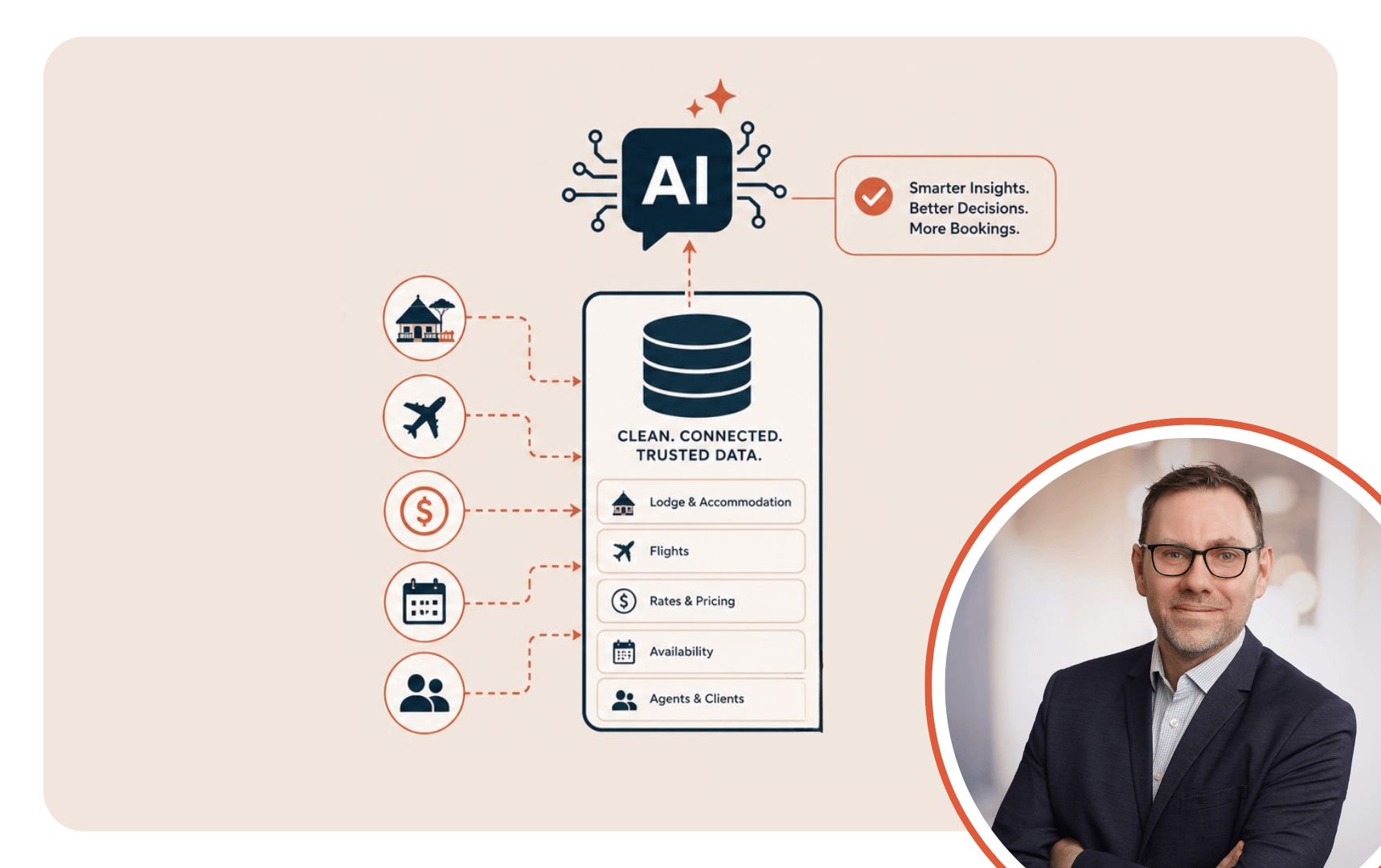
Technology should reduce pressure, simplify workflows, and remove repetitive friction behind the scenes. It should allow teams to move faster without sacrificing the personal side of safari that makes this industry special in the first place.
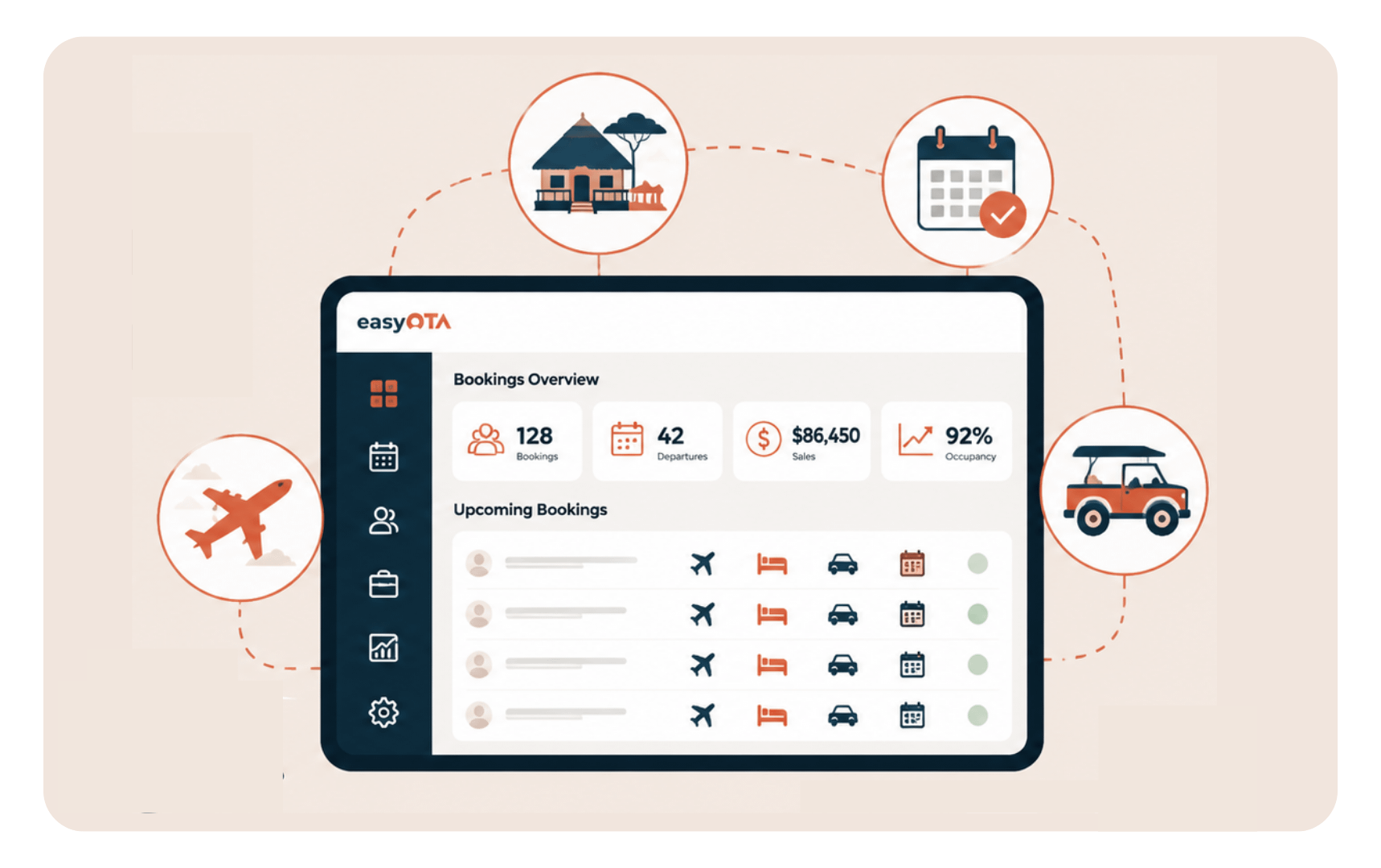
That belief shaped a lot of how we approached building EasyOTA.
The goal was never to replace human expertise. If anything, I think stronger systems create more space for the human side of safari to shine.
Because when consultants spend less time fighting operational clutter, they gain more time to focus on travellers.
And ultimately, that is still where the real value of safari exists.
 Book a demo to see how we support success in our partners.