

Every few months I get asked a version of the same question. It comes from operators, from agents, from lodge owners: ‘Should we be worried about AI?’
It’s usually followed by a specific fear: that some algorithmic system is going to automate the expert knowledge it took a decade to build, commoditise the personalised service that defines the best safari operators, and hand control of the booking journey to a machine that’s never been to the Selous.
It’s a reasonable question. But I think it’s being asked the wrong way around.
Let’s Be Honest About What AI Is Currently Good At
I’m not going to tell you AI isn’t going to change things. It already is.
Generative AI tools can write a passable safari itinerary in thirty seconds. They can answer traveller questions at 2am without a human in the loop. They can summarise lodge reviews, compare pricing across multiple options, and draft follow-up emails that sound human enough to be convincing.
These things are real. Some of them are already being used by your competitors. And some of them are genuinely useful.
But here’s what I’ve noticed: the safari operators who are getting most anxious about AI are often the ones who haven’t yet systematised the parts of their operation that AI would most logically assist with. They’re worried about being replaced by automation while still building quotes in spreadsheets.
That’s the wrong order.
What AI Still Can’t Do in Safari
I’ve spent enough time in this industry to know where the real value lives. And a lot of it is still beyond what any AI system can replicate reliably.
It can’t know that the specific camp a client is asking about has a maintenance issue this season that affects two of its best suites. It can’t weigh the personality of a particular guide against the specific interests of a family travelling with teenagers. It can’t judge whether a particular client, based on how they’ve communicated, would thrive in a more remote, uncomfortable bush experience or would be happier with something more polished.
These are judgement calls. They come from years of experience, from relationships with suppliers, from understanding people. No language model trained on internet data has that. Not yet. And by the time it does, the goalposts will have moved again.
The operators who deliver the most exceptional safaris aren’t doing so because of their systems. They’re doing so because of their expertise and their relationships. That’s not going anywhere.
But Here’s Where I Think the Opportunity Is
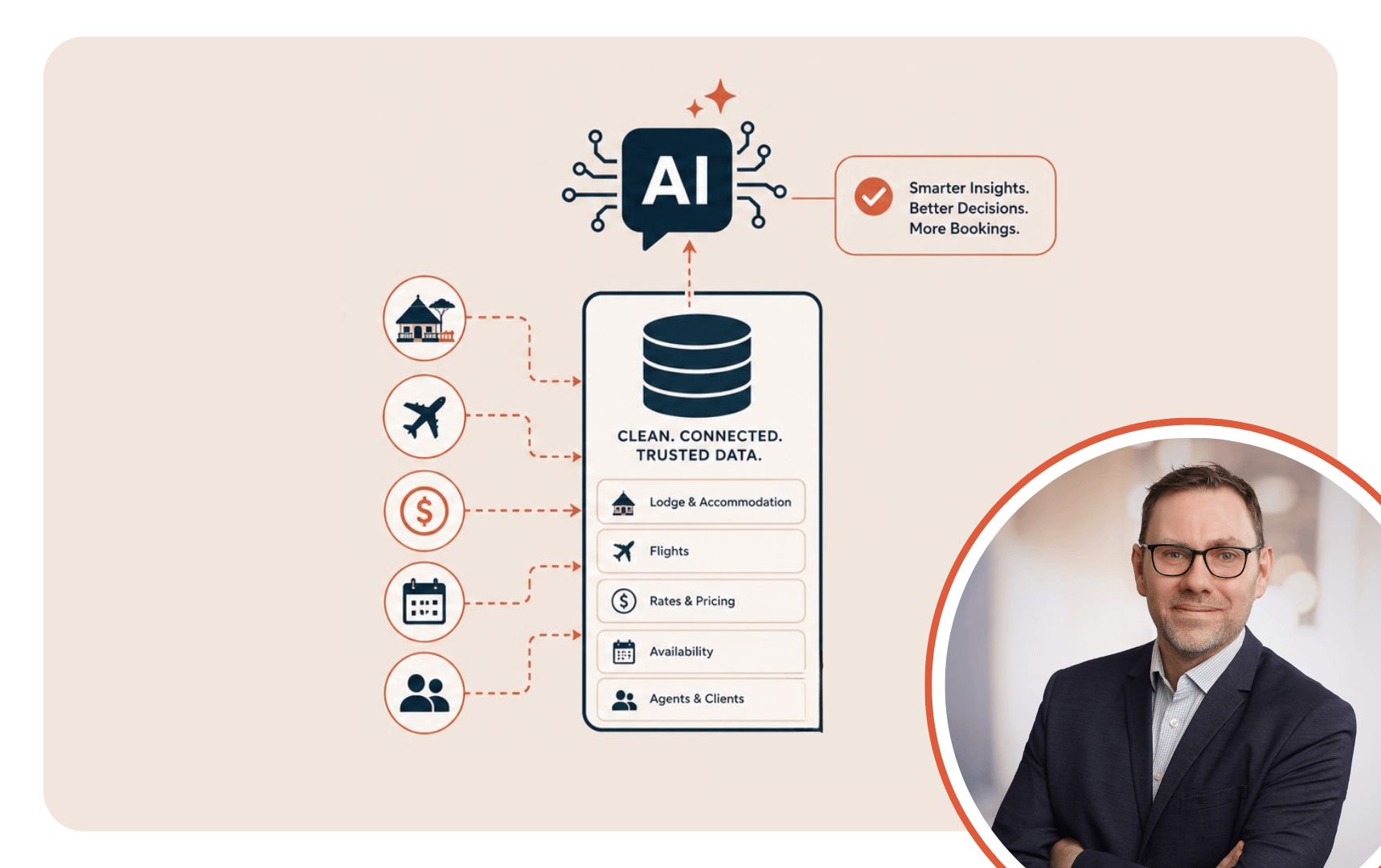
The conversation about AI in safari should be less about fear and more about leverage.
If an AI tool can draft a first-pass itinerary in thirty seconds, your team’s job becomes refining it, applying the expertise that makes it genuinely exceptional, rather than building it from scratch. That’s a better use of experienced people’s time.
If an AI can answer routine enquiries out of hours ‘what’s the best time to see the wildebeest migration?’ or ‘what’s your cancellation policy?’ your team can focus on the high-value conversations that actually require a human.
If predictive tools can help you understand which enquiries are most likely to convert, your sales effort becomes more targeted.
None of this replaces the safari expert. But all of it makes the safari expert more productive.
The Thing I Keep Coming Back To
There’s a version of the future where AI helps a twenty-person DMC compete on speed and presentation with platforms that have hundreds of people behind them. Where the boutique experience operator in the Okavango can respond to a complex group enquiry in the same timeframe as a much larger competitor. Where the expertise that makes East African safari extraordinary reaches more travellers, faster, without any of that expertise being diluted.
That’s the version I’m working towards.
The risk isn’t that AI will replace the people who make safari exceptional. The risk is that operators who don’t engage with these tools will find themselves operating at a structural disadvantage to those who do.
My honest view: the operators who will thrive over the next decade are the ones who use technology, including AI, where it genuinely helps, to multiply the impact of their expertise, rather than resist it entirely or hand over the steering wheel.
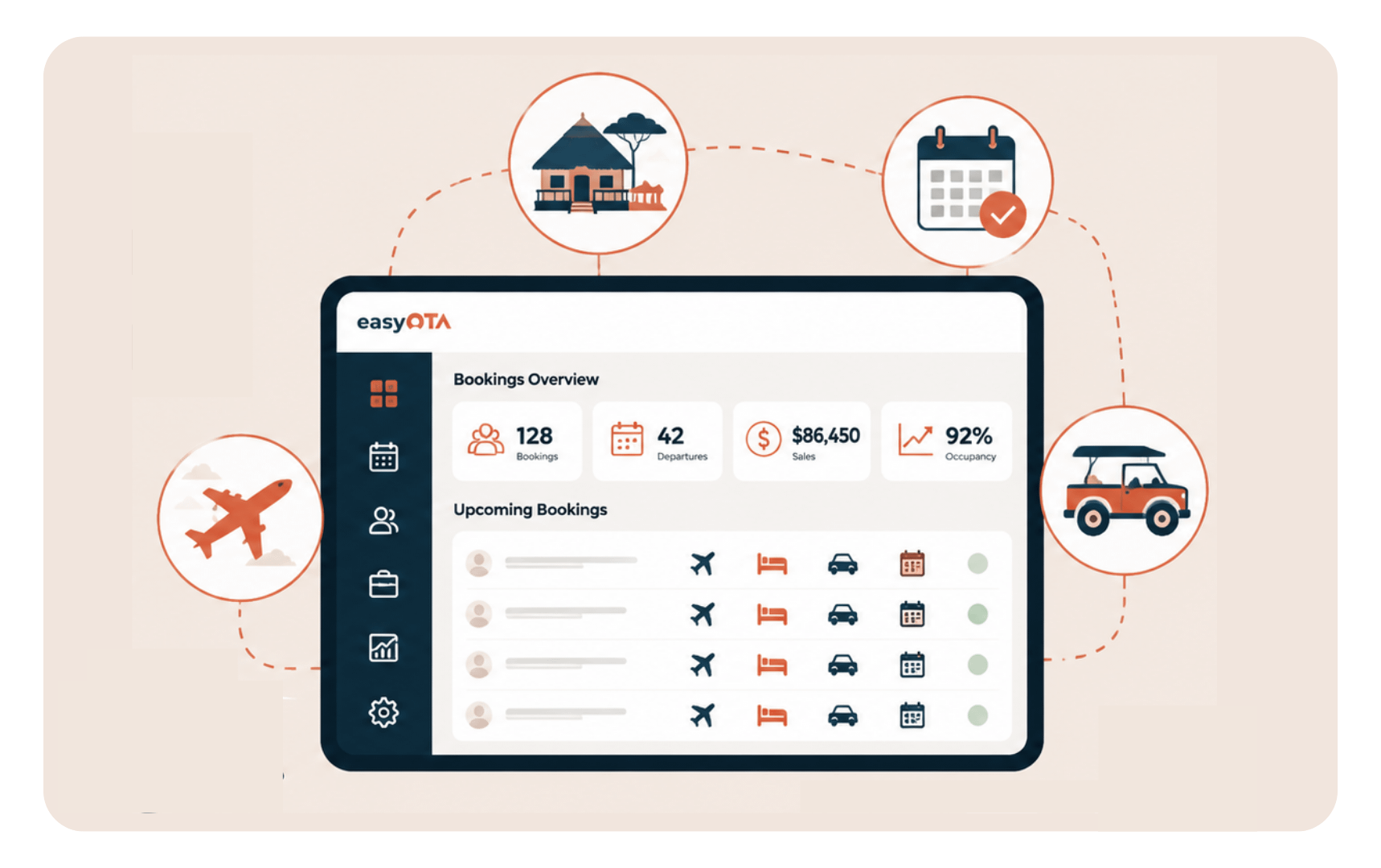
The magic of a great safari is irreproducible by any algorithm. Your job, and ours at EasyOTA, is to make sure the path to that magic is as smooth and fast as possible. For you, and for every client considering it.
 Book a demo to see how we support success in our partners.