

One thing I’ve noticed after years working with safari businesses is that operational problems rarely appear dramatically.
They build quietly.
A quote takes slightly longer than it used to. Pricing becomes harder to track consistently. Availability confirmations start living across multiple email threads. Consultants spend more time correcting workflows manually.
Individually, these problems feel manageable.
But over time they compound.
Eventually the business begins carrying operational weight that nobody fully notices anymore because it has become normal.
But…Complexity Is Not The Real Problem
Safari will always be operationally complex.
Honestly, that complexity is part of what makes the industry special.
Operators are coordinating extraordinary journeys across multiple countries, suppliers, experiences, and logistical moving parts.
The issue is not complexity itself.
The issue is unmanaged complexity.
That is where operational clarity becomes incredibly important.
What Operational Clarity Actually Means
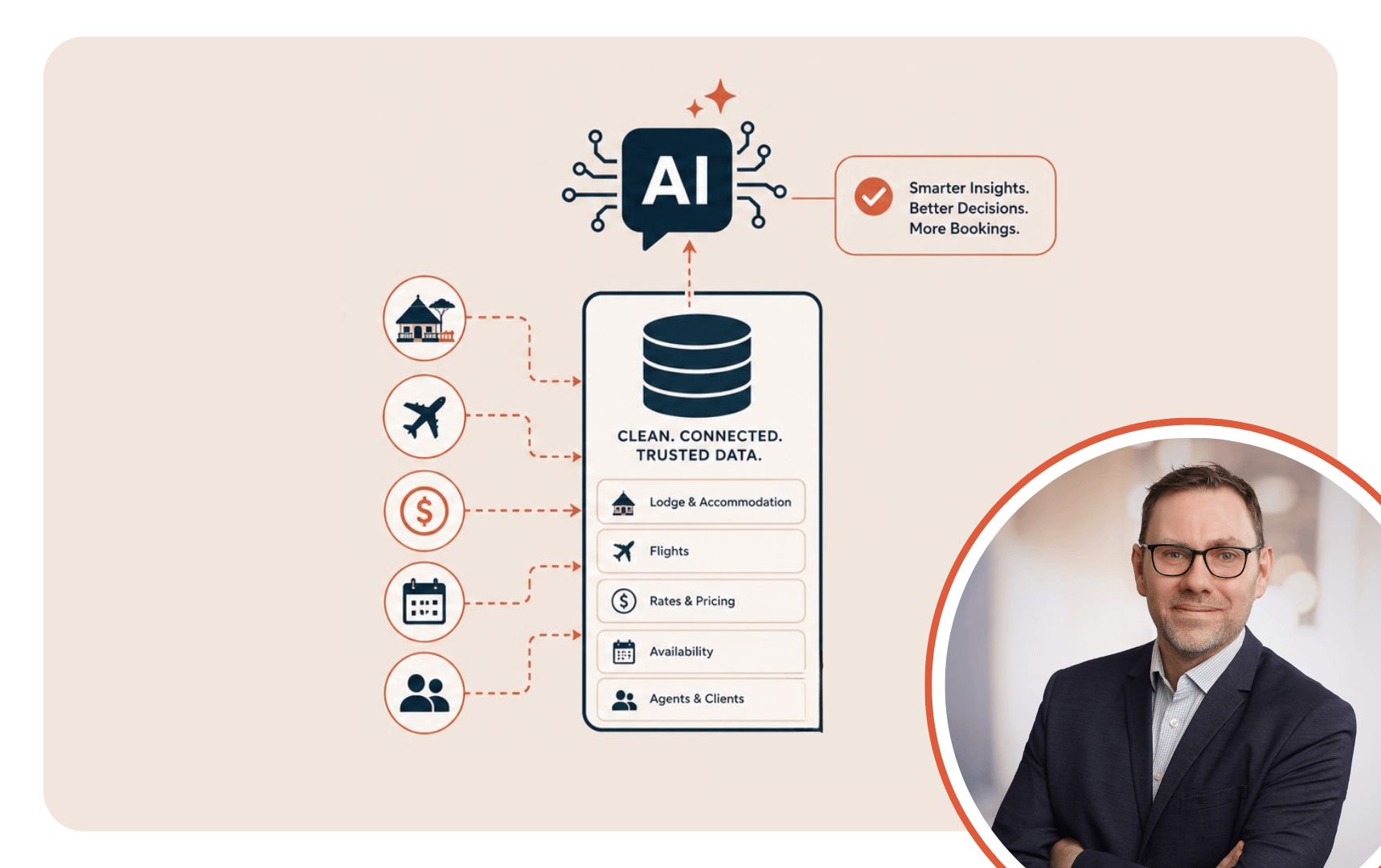
For me, operational clarity means teams know exactly where information lives.
Pricing structures are centralised. Availability is visible. Processes are repeatable. Communication is organised.
It removes ambiguity from the booking process.
I’ve worked with safari businesses where operational knowledge depended heavily on one experienced person carrying most of the information in their head.
That may work temporarily.
But once enquiry volumes increase, the business becomes fragile very quickly.
Why Scaling Safari Businesses Often Feels Difficult
One thing I hear often from safari operators is that they feel overwhelmed by growth.
And in many cases, the issue is not demand.
The issue is that the operational systems underneath the business have not evolved alongside the growth itself.
When workflows remain fragmented and heavily manual, every additional booking creates more checking, more communication layers, more duplicated work, and more operational pressure.
Eventually growth begins feeling chaotic rather than energising.
I think that is one of the biggest operational risks safari businesses face today.
The Industry Is Rethinking Technology
For a long time, safari operators had little choice other than adapting generic travel software into safari operations.
But generic systems rarely understand safari-specific realities cleanly.
Circuit discounts. Park fees. Agent pricing structures. Room allocations. Provisional bookings. Multi-stop itineraries.
When these things sit outside the workflow itself, teams inevitably start relying on spreadsheets and disconnected systems again.
That duplication quietly drains operational momentum.
I think the industry is beginning to recognise that safari needs systems designed specifically around safari logic from the beginning rather than systems adapted afterwards.
Operational Simplicity Can Create Competitive Advantage
The safari businesses positioning themselves strongest for the future are usually not the ones adding the most complexity.
They are the ones simplifying workflows behind the scenes.
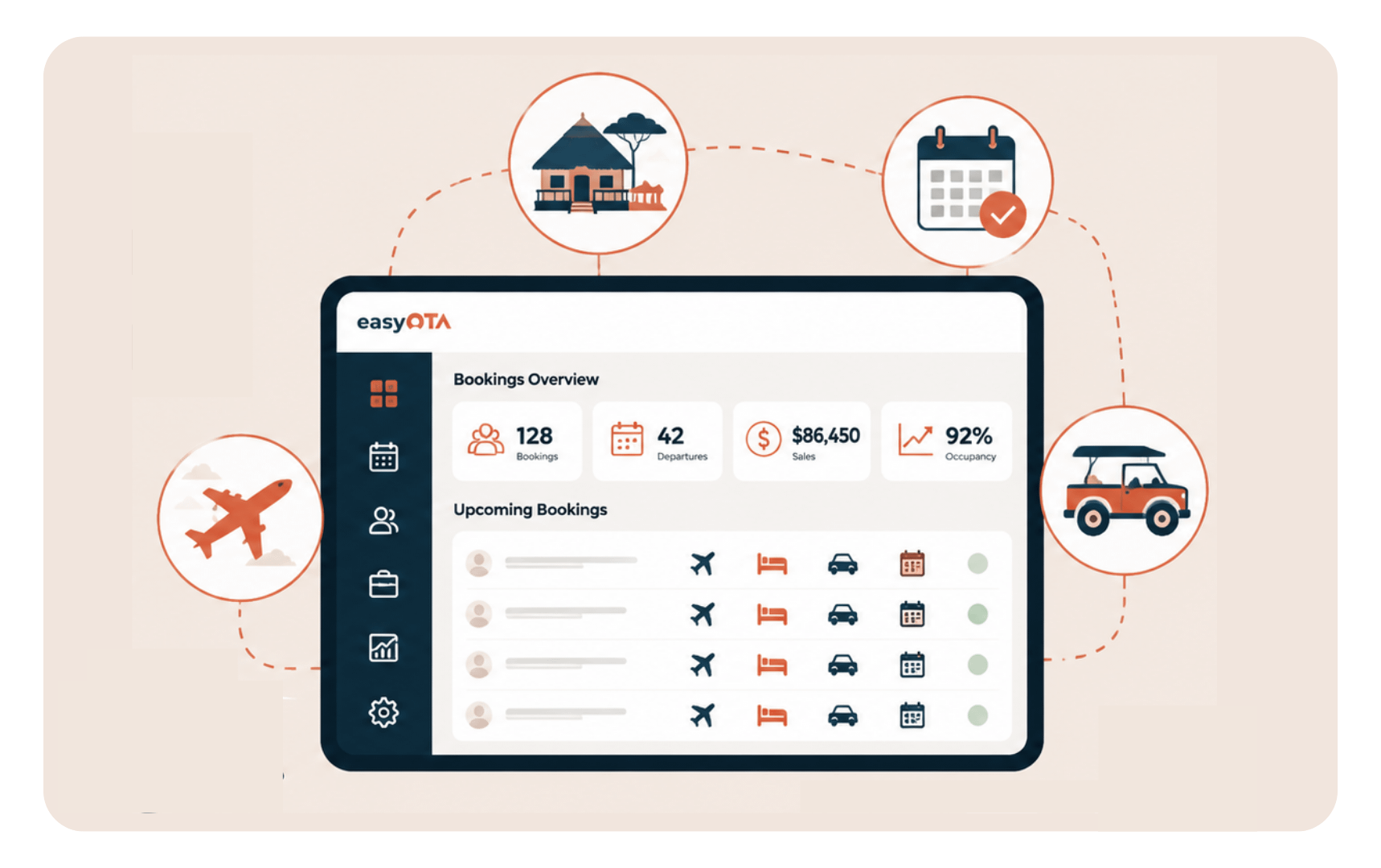
They reduce friction. They centralise information. They improve quoting speed. They create cleaner operational systems.
That does not replace expertise.
If anything, it allows expertise to operate far more effectively.
And I think that belief is increasingly shaping the future of safari booking technology itself.
Because ultimately, safari businesses should spend more time creating extraordinary journeys and less time fighting operational clutter behind the scenes.
 Book a demo to see how we support success in our partners.